
Recent advances in critical care: Part II
Introduction With the increasing number of critically ill patients being admitted to intensive care units (ICUs), there is a need for newer techniques and treatment modalities to evolve for their…

Introduction With the increasing number of critically ill patients being admitted to intensive care units (ICUs), there is a need for newer techniques and treatment modalities to evolve for their…

Introduction Infection prevention and control (IPC) is essential to prevent nosocomial infections. This manuscript aims at investigating the current use and role of robots and smart environments on IPC systems…

Introduction Robotics is frequently regarded as a crucial enabling technology for tomorrow's society. This study looks at how robotics and intelligent medical devices (IMD) are used in intensive care. The…

Introduction Artificial intelligence–based clinical decision support (AI-CDS) tools to enhance personalized medicine is on the rise. In the ICU, complex and high-stakes decisions are made that might benefit from data-driven…

Introduction Critical care ultrasound (CCUS) is widely accepted in the field of critical care medicine as a valuable tool in the intensive care unit and emergency department. It plays a…

Introduction A significant source of morbidity and mortality in haematological patients, particularly those undergoing hematopoietic stem cell transplantation (HSCT), is invasive fungal diseases (IFD). Due to non-specific symptoms and a…
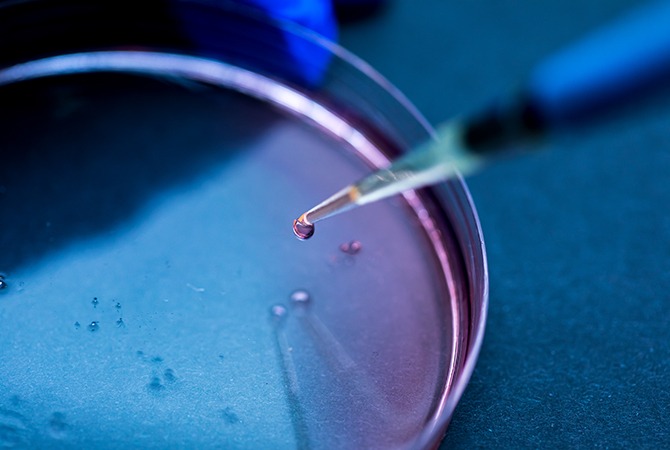
Introduction Invasive fungal diseases (IFDs) present an increasing global burden in immunocompromised and other seriously ill populations. Early diagnosis encompassing accurate detection and identification of the causative agent and of…

Introduction As at-risk populations grow, invasive fungal infections keep rising. The high morbidity and mortality rates associated with fungal diseases require ongoing research into novel antifungal agents and diagnostic techniques…

Introduction Intelligent health applications are being developed using automation technology to help patients by providing smart health solutions. The proposed research aims to create an intelligent automated hospital infrastructure capable…

Introduction Numerous testing advances have benefitted the study of infectious illnesses, beginning with the first light microscope in 1716, followed by Koch's Postulates in 1890, and, most recently, the discovery…